Interesting Facts About the Tandara Surname
How to read these curiosities
This page does not repeat the genealogy or the history of how the surname developed. Its purpose is to show how the same or a similar name, Tandara, appears in other languages, countries and cultural settings, while clearly distinguishing a coincidental similarity of names from an actual family connection.
A rare and distinctive surname
The surname Tandara belongs among the rare Croatian surnames. Its rarity makes it possible to trace family branches across several centuries and connect them with a high degree of certainty. Unlike very common surnames, most present-day bearers of the Tandara surname can trace their origins back to common ancestors.
Linguistic recognisability
The form Tandara consists of three short syllables — Tan – da – ra — which makes it easy to pronounce and compare across different languages. This simple sound structure is one reason why the name is particularly interesting when compared with identical or similar forms outside the Croatian context.
The same name does not mean the same origin
The appearance of the word Tandara in another country is not, by itself, evidence of migration or a shared ancestor. Each example on this page is considered separately according to language, local history and available sources, and any possible connection with the Croatian surname is described only as a hypothesis when direct evidence is lacking.
The name Tandara around the world
Although the origin of the Croatian surname Tandara has not yet been established with certainty, it is interesting that the word Tandara, or very similar forms of it, appears in different parts of the world – as a surname, a personal name, the name of a locality, or a word with a particular cultural meaning.
This similarity does not necessarily indicate a common origin. In most cases, these names developed independently of one another.
Tandara and Țândără – Croatian and Romanian forms of the name
The surname Tandara appears as an indigenous surname in two European countries – Croatia and Romania – and in both countries it occurs in two forms: as a surname and as the name of a locality, hamlet, district or smaller rural area. Despite this interesting similarity, the Croatian and Romanian forms do not share a common history or a common origin. According to the available information, the Croatian surname Tandara dates back to the late 17th century, while no comparable historical information is available for the Romanian surname Țândără.
Croatian form: Tandara
Spelling: Tandara
Pronunciation: TÀN-da-ra, with the stress on the first
syllable
Phonetic characteristics: a hard t sound, short vowels and an
even rhythm.
Historical context: the surname appears in Dalmatia and
Herzegovina.
Etymology: it is most commonly associated with the word
tandir – a metal stove used during the period of Ottoman rule.
The surname may have originated from the occupation of making or maintaining
metal stoves, from the object itself, namely the tandir as a recognisable
feature, or from a locality where such a stove was used.
Romanian form: Țândără
Spelling: Țândără
Pronunciation: tsân-DĂ-rə, with the stress on the second
syllable
Phonetic characteristics: the initial letter Ț is pronounced
like “ts”, while the vowel ă is a neutral schwa sound.
Etymology: the Romanian name derives from the word
țândără, meaning a splinter, wood chip or small piece of wood.
The surname most likely originated from an occupation connected with
woodworking, from a characteristic of a person who worked with wood chips,
or from a local name referring to wood remnants.
Differences in spelling and pronunciation
- Spelling: HR: Tandara / RO: Țândără
- Pronunciation: HR: TÀN-da-ra / RO: tsân-DĂ-rə
- Stress: HR: beginning / RO: middle
- Origin: HR: tandir, metal stove / RO: splinter, wood chip, woodworking
Listen to the pronunciation of both forms
Click the speaker icon to hear the pronunciation
The Tandara surname in Slovakia
In Slovakia, the surname Tandara appears primarily in the areas of Žilina and Košice, where it has been recorded among several modern families. Its present-day presence in these regions is most likely the result of population migrations from Transylvania during the 18th and 19th centuries. Genealogical databases and the geographical distribution of the surname suggest that Tandara is not an indigenous Slovak surname, but was brought to Slovakia from the Romanian area, where the related form Țândără exists.
There are also well-known contemporary bearers of the surname in Slovakia, which further confirms its presence:
- Lukáš Tandara — a professional puppeteer, actor and improviser from Žilina, associated with Clowndoctors.
- Marián Tandara — a footballer from Žilina who played for the U21 national team and plays as a right-back in the Slovak second division.
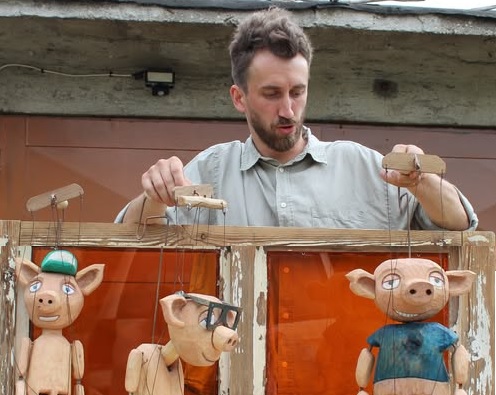

These examples show that the surname Tandara has survived and developed in various fields in Slovakia — from theatre to sport — but they do not alter the basic conclusion: it is most likely a surname that reached Slovakia from the Romanian area, where there is a strong linguistic and historical basis for its origin.
Nevertheless, although Romanian origin is the most likely explanation, the possibility cannot be completely excluded that an individual Croatian bearer of the surname Tandara settled in Slovakia during the 18th or 19th century. The Croatian form of the surname has a different etymology and historical development, so such a possibility could be clearly confirmed or ruled out only through DNA analysis, by comparing Croatian, Slovak and Romanian genetic lines.
Australia – origin and use of the name Tandara
Origin of the name Tandara in Australia
In the Australian context, Tandara is regarded as a name of Aboriginal origin, adopted from local languages of the Indigenous peoples of south-eastern Australia. In different dialects, the word is interpreted as a camping place, a place to stay or a resting place, and in modern interpretations also as a peaceful place or a place of quiet.
This is an example of the way European settlers adopted Aboriginal words and used them as names for pastoral properties, farms, settlements and other localities.
How the name Tandara developed in Victoria
According to this account, the name appeared in Victoria during the 1840s, when European settler John Aitken named a large pastoral run Tandara, using a word he had heard from local Aboriginal people.
- an Aboriginal word,
- the Tandara pastoral run in the 1840s,
- the name of a locality,
- the name of various premises, institutions and businesses.
This Australian origin of the name is not connected with the Croatian surname Tandara; it represents an independent origin and development of the same or a very similar name.
Where the name Tandara is used today
1. Official locality
Tandara, Victoria is the name of a rural locality in the Shire of Loddon.
2. Historical pastoral property
The name Tandara Station appears in historical records connected with nineteenth-century pastoral properties.
3. Farms, vineyards, tourism and other premises
The name Tandara is also used for farms, vineyards, rural accommodation, health and community centres, and projects associated with nature and rural surroundings.
4. Symbolic meaning
In modern use, the name is often associated with peace, nature, water, harmony and a rural setting.
Examples of the use of the name Tandara in Australia
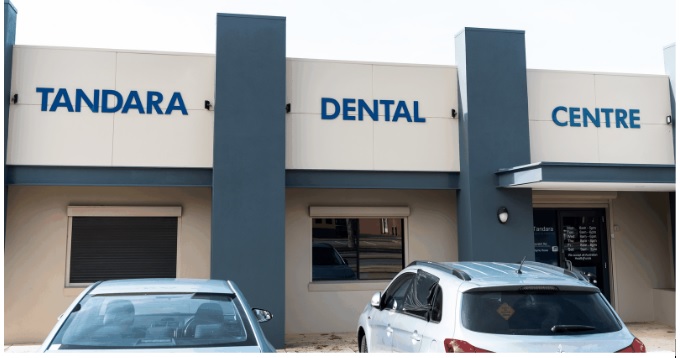
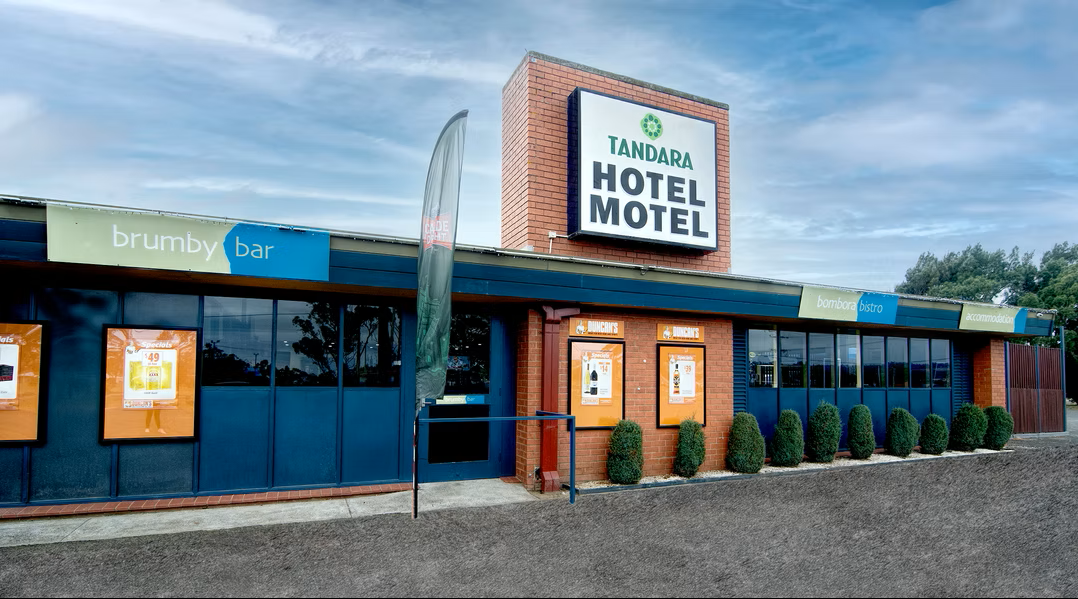
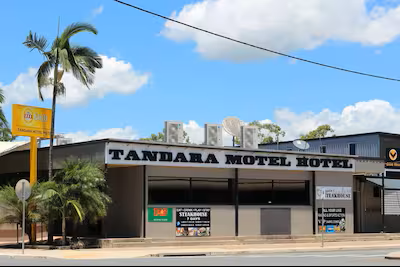

Summary: in the Australian context, Tandara is interpreted as a name of Aboriginal origin associated with a place of staying, resting or peace. During the nineteenth century it was adopted as the name of a pastoral property and later spread to a locality and to a range of rural, tourism, health and business premises. This origin is independent of the Croatian surname Tandara.
Brazil – a female personal name
In Brazil, Tandara is used as a female personal name, and its international recognition was further increased by the well-known Brazilian volleyball player Tandara Caixeta. Although there is no single official explanation for why this particular name became popular, its phonetic and aesthetic qualities very likely contributed to its appeal.


In the Brazilian context, the sound of the personal name Tandara is also noteworthy. Its three clear syllables create a rhythmic and easily pronounced form that may contribute to its recognisability beyond Portuguese-speaking settings. This is a linguistic observation, not evidence of why any particular family chose the name.
The name Tandara possesses a number of qualities that are often considered desirable in personal names:
- melodic quality and natural rhythm
- exceptional sonority and ease of pronunciation
- a harmonious syllabic structure
- dynamism and a sense of movement
- ease of memorisation
- distinctiveness among other names
- easy pronunciation in different languages
- originality and rarity
- a modern yet timeless character
- phonetic balance and harmony
- a warm and pleasant final sound
- elegance without complexity
- a positive first impression when spoken
- ease of spelling in different languages
- universality across different cultures.
Open questions
The most interesting open questions concern whether some European occurrences of the surname are related to one another or developed independently, and how reliable the local interpretations of the name are in Romania, Slovakia and Australia. Until stronger documentation is found, these comparisons are presented here as linguistic and cultural curiosities rather than as proof of a genealogical connection.
Contribute to this collection
If you have a document, photograph, publication or reliable information specifically related to one of the international examples of the name Tandara shown here, you can send it through Contact & Collaboration. Such contributions may help confirm, refine or reject a particular interpretation.